
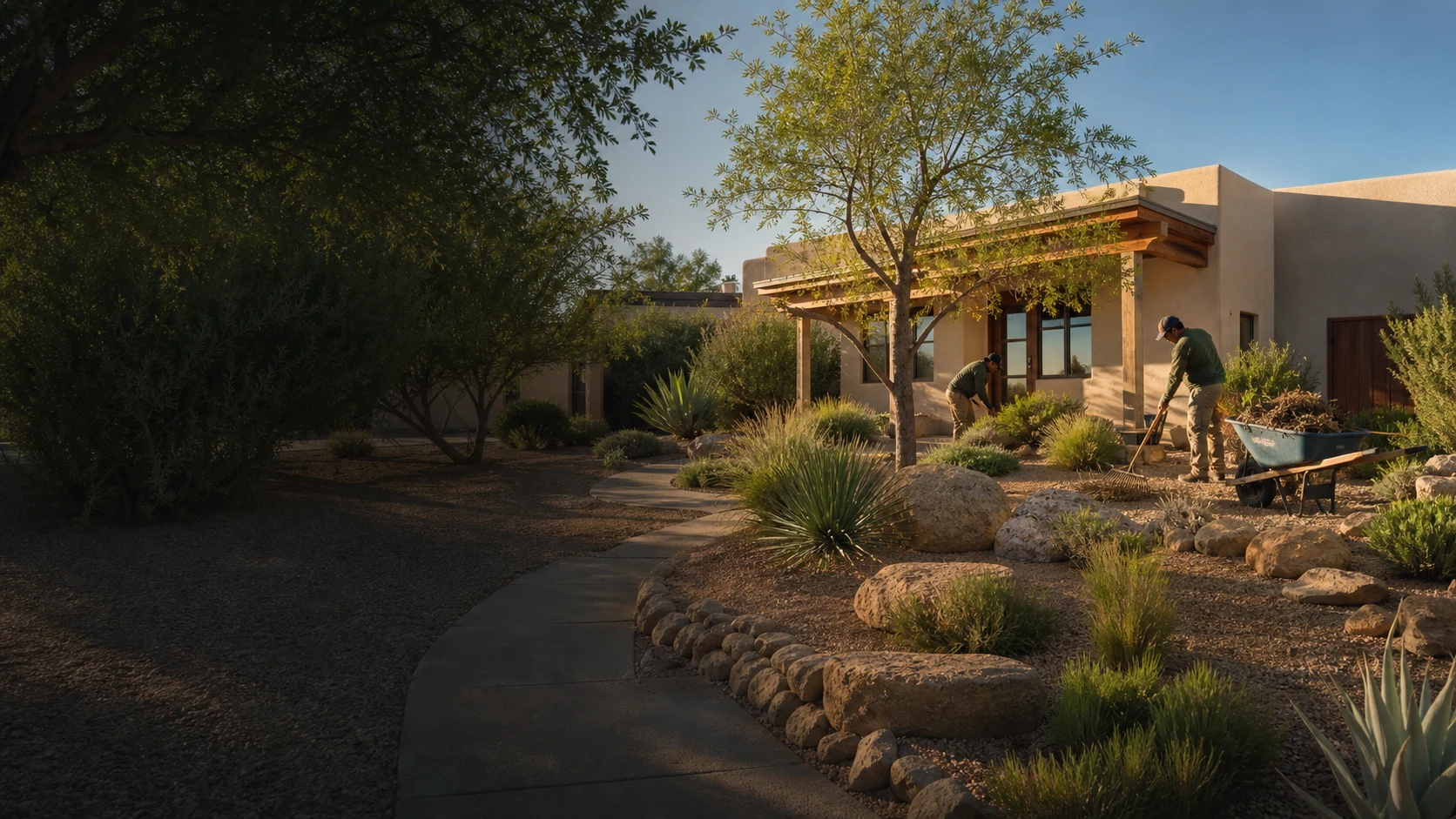
Desert landscaping in Bernalillo NM has to survive things a garden magazine never mentions: caliche two feet down, wind that strips mulch off a bed in one afternoon, and a monsoon storm in August that dumps an inch of rain in twenty minutes. We've dug enough yards along the Bernalillo and Rio Rancho corridor to know which ideas hold up past year one and which ones look great in May and fall apart by September.
Start with the soil, not the plant list
Most yards we work on sit on caliche, a hard, chalky layer of calcium carbonate that can start six inches down or two feet down, depending on the lot. It does not drain. Water sits on top of it and roots that hit it just stop. Before anyone picks out plants, we dig test holes and check for caliche and for how alkaline the soil is. If the pH is high, and around here it usually is, plants that look fine at the nursery will yellow out within a season.
Our fix is usually to break through the caliche layer where trees and larger shrubs go in, rather than fighting the whole yard. A post-hole auger or a breaker bar on a two-foot hole is cheap insurance. Skip it and you get a "bathtub" that fills after a monsoon storm and drowns the roots instead of watering them.
Pick a gravel or crusher fine that matches how you use the yard
Gravel yards are the default around here for good reason: no mowing, low water, and they handle wind and freeze-thaw nights without heaving the way turf does. But not all gravel is the same job.
- Crusher fines pack down into a firm, walkable surface, good for paths and side yards where people actually walk.
- 3/8 inch minus or similar decorative gravel looks clean around beds and foundations but shifts underfoot and is a pain to shovel snow off in January.
- Larger river rock is good for drainage channels and drywells where you want water to move, not settle.
We're not fans of plastic sheeting under gravel. It always surfaces eventually, usually right where a Siberian elm seedling has pushed through a slit in it, and once it's poking up it looks worse than no barrier at all. A woven landscape fabric, pinned properly and topped with at least two inches of gravel, does the job with less headache long term. If you're deciding between gravel and rock for a specific area, we cover that in more detail in our gravel vs rock landscaping guide.
Plan for tumbleweeds and goathead before they show up
Russian thistle and goathead thorns move in fast on bare or thin gravel, especially near open field edges in Bernalillo and Placitas. A dense two to three inch gravel bed over a good fabric barrier cuts down on both, since there's less bare soil for seed to catch. It's not zero maintenance. Nothing here is. But it's a fraction of the pulling and spraying you'll do on a yard with thin, patchy coverage.
Build in shade and windbreaks, not just plants
Full sun here is brutal from June through August, and spring wind can flatten young plantings before they establish. A shade sail or small ramada over a patio buys real relief without adding much watering burden. A row of Apache plume or fernbush on the windward side of a yard slows things down enough to protect softer plants behind it. We stake new trees for the first year regardless of species, since one spring wind event can snap a shallow root ball loose before it's anchored.
Native and adapted plants matter here more than curb appeal alone. Chamisa, desert willow, red yucca, and various penstemons handle our alkaline soil and the freeze-thaw nights of late fall and early spring without much fuss. If you want a fuller plant-by-plant breakdown, we wrote a longer xeriscaping guide for the Albuquerque area that applies just as well to Bernalillo and Corrales lots.
Hardscape that handles our freeze-thaw cycle
Plenty of desert yards pair gravel with a concrete patio, walkway, or low wall, and this is where we see the most callbacks from other contractors' work. A 4 inch slab poured with rebar, not just wire mesh, on soil that wasn't compacted properly will crack along the caliche line within a couple of winters. Proper base prep and control joints cut at the right spacing solve most of it. We keep a new slab out of heavy use for five to seven days minimum, longer in a cold week.
A typical front yard conversion, in the 1,500 to 2,500 square foot range, usually runs a day or two for our crew: clearing old growth (often a trailer load or two of debris), grading for drainage away from the foundation, then fabric and gravel or crusher fines. Cost depends on gravel type, whether caliche removal is needed, and how much irrigation gets added, so we'd rather walk the yard and give real numbers than guess over the phone.
If you're planning a desert landscaping project in Bernalillo NM, or you inherited a yard full of tumbleweeds and old gravel that never got fabric under it, give us a call at 505-737-2304 or request a free estimate through the form. We'll tell you straight what your soil needs before we tell you what looks good.